Program
Automation and Control Engineering
Length of time
4 years
Program Code
7520216
Tuition fees
VND 27.000.000/year*
Minimum required accumulated credits
186 credits
(quarter system – 3 semesters/year)
IntroduTion
4 years
186 credits (quarter system – 3 semesters/year)
VND 27.000.000/year*
*Tuition fees are guaranteed not to increase for four years from the date of enrollment
Automation and Control Engineering provides fundamental knowledge in electricity, electronics, signals and systems, automatic control theory, and control programming, combined with advanced technologies such as microprocessors, robotics, supervisory control and data acquisition (SCADA) systems to operate machines and automated devices, aiming to optimize production processes. Today, automation and control engineering is widely applied in every aspect of life, from household automated electronic devices to modern industrial production lines, opening up diverse career opportunities across many fields.
The Bachelor’s program in Automation and Control Engineering at Eastern International University (EIU) is designed with a balance between theory and practice, enabling students to master theoretical foundations and develop strong professional skills. By pursuing this major, students are equipped with core knowledge of the discipline and have the opportunity to specialize in two main orientations: Industrial Automation and Control Systems.
Training orientations within the Automation and Control Engineering program include:
- Industrial Automation: Focuses on calculating, designing, and programming automated systems, robot control, remote monitoring and data acquisition via networks, image processing, and embedded system programming in automation to increase productivity, optimize automated production lines, and improve manufacturing processes.
- Control Systems: Focuses on research, calculation, monitoring and data acquisition, developing control algorithms, and seeking optimal solutions for robot controllers, active noise control systems, as well as applying artificial intelligence to automated systems in order to enhance production.
About the School of Engineering

Offering majors in Electrical Engineering, Mechatronics Engineering, Automation and Control Engineering, Electronics and Telecommunications Engineering, and Mechanical Engineering, the School of Engineering focuses on enhancing learners’ capabilities and creating added value through highly integrated and continuously updated training programs.
PROGRAM HIGHLIGHTS
- 100% of students will achieve at least IELTS Band 6.0 before graduation
- The study program integrates a variety of technical computing software (Matlab, Visual C#), coding, and programming software for PLCs and SCADA systems, robot simulation software, CAD/CAM-CNC, as well as other design software and electronic design automation software (Orcad, Multisim, Proteus)
- Students get lots of practical hours and can study in a system of practice rooms, large-scale laboratories equipped with modern machinery, equipment, and use the same technologies being used by businesses
- Students will have opportunities to be trained at top companies in Vietnam and abroad, beginning from the 3rd year
- Students will conduct actual projects assigned by businesses and lecturers – or perform Capstone Projects with real companies
Program learning outcomes
Upon completion of the program, students will be able to:
- PLO 1. Apply knowledge of political theory and social sciences, as well as an understanding of law to life and professional practice; demonstrate knowledge of national defense and security to foster patriotism; acquire knowledge of self-training for physical fitness and personal health.
- PLO 2. Apply knowledge of mathematics, natural sciences, and engineering to describe, calculate, and solve engineering problems, as well as simulate processes, components, and systems in the fields of Electrical, Electronics, and Automatic Control Engineering.
- PLO 3. Apply professional knowledge to identify, formulate, and solve engineering problems such as analyzing, calculating, and evaluating processes, components, and systems in the fields of Electrical, Electronics, and Automatic Control Engineering.
- PLO 4. Design a system, component, or process that meets desired requirements within practical constraints such as economics, environment, society, policy, ethics, health and safety, manufacturability, and sustainability.
- PLO 5. Communicate effectively and appropriately through oral, written, and multimedia forms with stakeholders in technical and social environments; use English effectively in professional and technical exchanges.
- PLO 6. Demonstrate the ability to work independently as well as collaborate effectively in teams; manage tasks efficiently to ensure the achievement of plans and goals.
- PLO 7. Proficiently use technical equipment, tools, and software for experimentation and technical practice in the fields of Electrical, Electronics, and Automatic Control Engineering.
- PLO 8. Design and conduct experiments, analyze collected experimental data to describe electrical and electronic processes, synthesize information to draw valid conclusions; demonstrate entrepreneurial skills in the professional field.
- PLO 9. Recognize personal and collective responsibilities, professional ethics, integrity, and act professionally in situations related to engineering practice.
- PLO 10. Recognize the necessity of lifelong learning; engage in self-learning, self-research, and apply new knowledge as needed to adapt to working environments.
STUDY ENVIRONMENT
Job Opportunities
After graduation, Automation and Control Engineering students have extremely diverse job opportunities, such as specialists, and consulting engineers in the design, operation, and maintenance at businesses, companies, factories, and production lines. Students will have enough knowledge to design and operate hardware and software systems that control machines, automatic equipment, and automatic production systems. Other opportunities include technology consulting, engineering design, programming, control, construction, and transfer of automatic and semi-automatic lines, systems, or even management of projects in the field of control and automation. Graduates can continue their postgraduate studies in Vietnam or abroad, or start up a business in automation control.
Alumni sharing
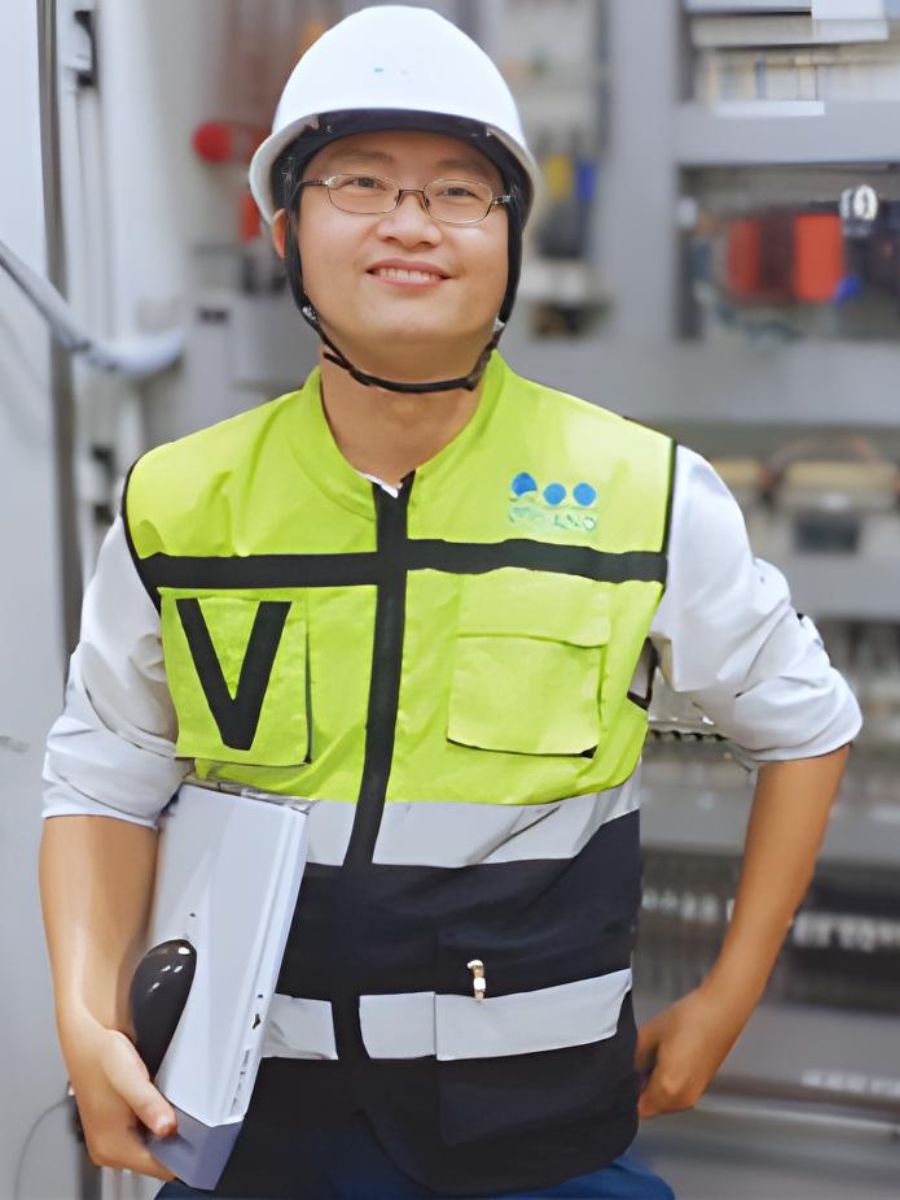
Nguyen Quang Luc
Cohort: 1
School of Engineering
Job: E&IC Engineer at Organo Việt Nam
“With the knowledge and skills I gained from EIU, I feel very confident at work, and this has been clearly reflected in my current job. It took me very little time to adapt and integrate into the working environment. The experience and English proficiency I acquired have also supported me greatly in developing my career.”

Nguyen Anh Duy
Cohort: 1
School of Engineering
Job: Technician Supervisor at Intel Products Vietnam - SHTP HCM
“The School of Engineering is well-equipped with modern facilities, and the practice-oriented curriculum allows students to gain substantial knowledge and skills before graduation. The lecturers are enthusiastic and highly knowledgeable in their fields. Both the faculty and the university genuinely care for and support their students. The program’s practical approach provides a solid foundation that helps graduates quickly adapt and grow in the real working environment.”

Nguyen Thanh Hiep
Cohort: 5
School of Engineering
Job: Manufacturing Engineer at Parker Meggitt Vietnam Company
“Studying at EIU was definitely the right decision for me. What convinced me most were the modern facilities, machinery, and equipment dedicated to engineering. The learning environment at EIU gave me the opportunity to experience real working conditions through site visits and long-term internships at major engineering companies. EIU equipped me with the essential skills to become an engineer, both in terms of technical expertise and language proficiency, through continuous projects throughout my studies. I had the chance to practice a wide range of professional skills, not only in automation but also in related fields such as mechanics and electronics.”
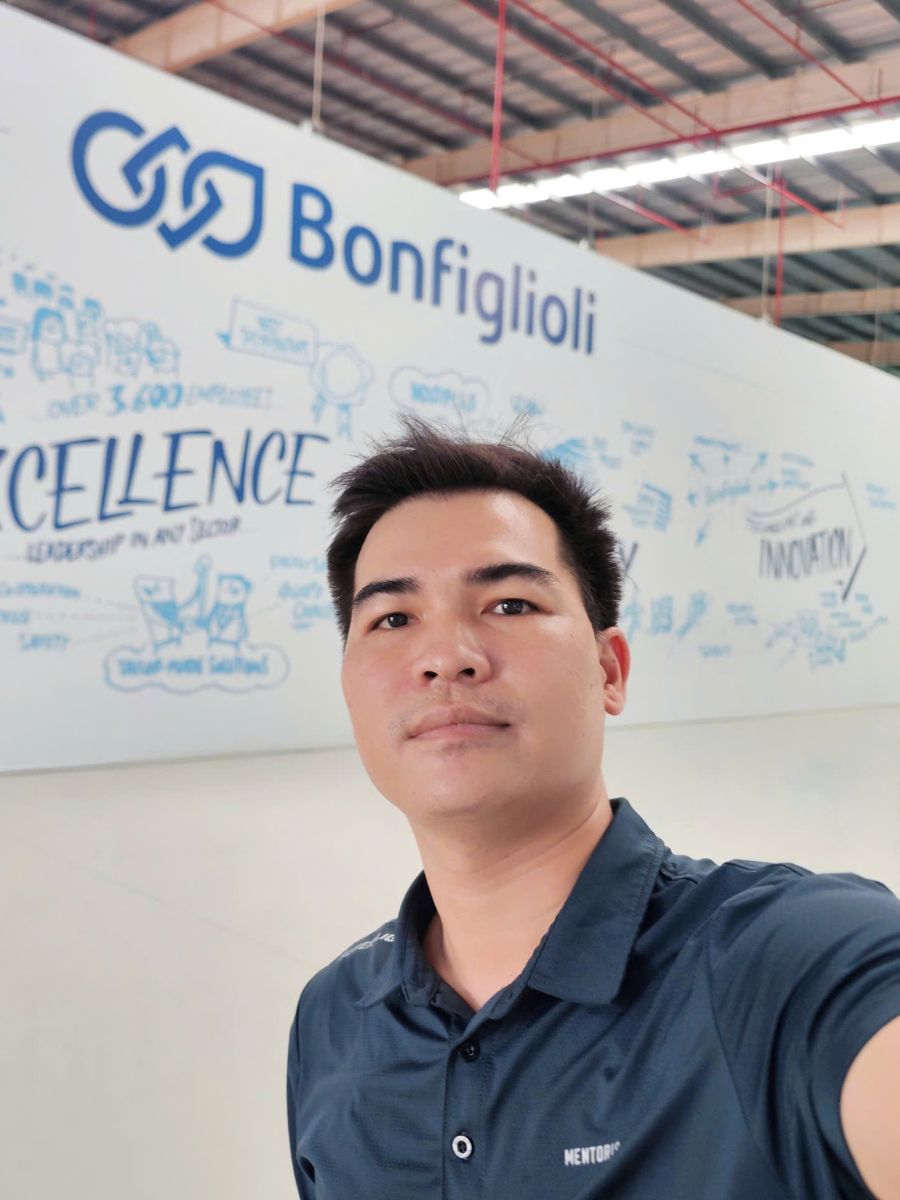
Hoang Duc Giang
Cohort: 4
School of Engineering - Control and Automation Engineering
Job: Process Engineer - R&D plant support Engineer, Bonfiglioli Vietnam Co., Ltd
“In today’s era of global industrialization, the field of Engineering always requires a strong and high-quality workforce. Besides having a solid technical foundation, engineering students also need to equip themselves with essential soft skills to quickly adapt to the dynamic international business environment. I believe these are exactly the outstanding advantages that EIU engineering graduates possess. I wish you all the best in choosing your true passion and achieving great success in your career!”